General Description
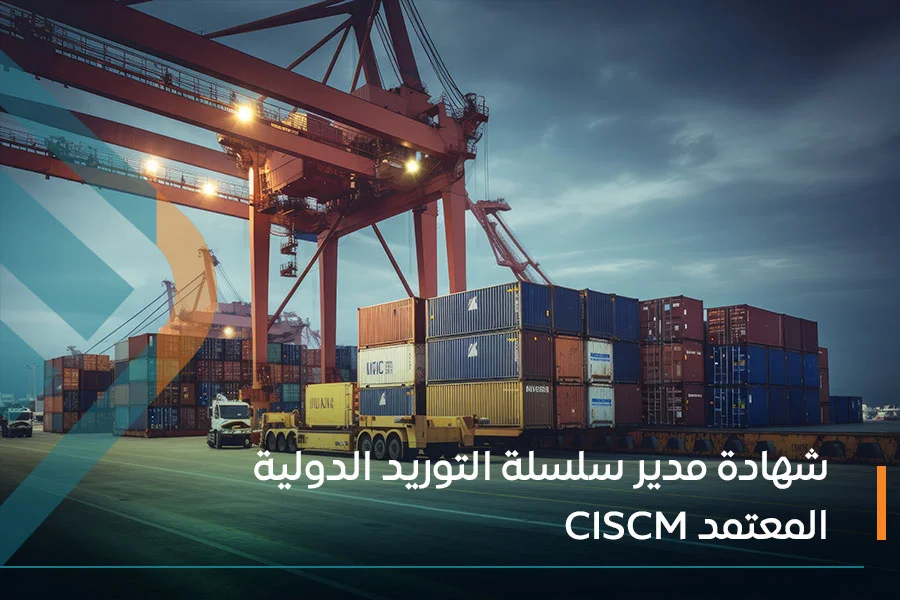
The Certified International Supply Chain Manager (CISCM) certification is an advanced professional qualification in supply chain management and logistics. It is designed for professionals and managers seeking to enhance their leadership capabilities and progress into managerial and strategic roles within organizations.
The CISCM preparation course helps participants understand supply chain planning, procurement and inventory management, logistics network design, supplier relationship management, performance measurement, and the management of risks and changes affecting local and international supply operations.
The certification focuses on the strategic aspects of planning, organizing, leading, and controlling supply chain activities. It is classified as the advanced level within the supply chain certification pathway offered by IPSCMI.
Through the CISCM course in Saudi Arabia, participants receive structured professional preparation that helps them review the exam topics and connect theoretical concepts with practical applications in procurement, logistics, inventory management, transportation, and distribution.
The Goals
The Certified International Supply Chain Manager (CISCM) course aims to:
- Prepare participants to understand the CISCM curriculum and sit for the international examination.
- Develop strategic skills in supply chain planning and management.
- Improve decision-making capabilities related to procurement, inventory, transportation, and distribution.
- Strengthen participants’ ability to manage risks and maintain supply continuity.
- Develop the leadership skills required to manage supply chain and logistics teams.
- Support professional development and progression into managerial and leadership positions.
- Help organizations improve operational efficiency and reduce waste and costs.
- Align supply chain operations with the organization’s strategic and financial objectives.
Target Auidence
The CISCM course is suitable for:
- Supply chain managers and professionals.
- Procurement and sourcing managers and specialists.
- Logistics, transportation, and distribution managers.
- Operations, production, and planning managers.
- Inventory and warehouse management specialists.
- Demand planning and sales forecasting professionals.
- Supplier relationship managers and specialists.
- Team leaders responsible for operational and logistics activities.
- Professionals working in industrial, commercial, and government sectors.
- Professionals seeking to progress into supply chain leadership positions.
- Holders of the CISCP certification or an equivalent professional qualification who wish to complete the advanced certification pathway.
Course Features
The Features
- A specialized training program designed to prepare participants for the international CISCM certification.
- Comprehensive content covering the strategic and operational aspects of supply chain management.
- Coverage of planning, procurement, inventory, transportation, and distribution concepts.
- Practical applications in risk management, resilience, and supply chain continuity.
- Development of leadership, decision-making, and supplier relationship management skills.
- Training on topics and practice models aligned with the nature of the international examination.
- Content tailored to the needs of the Saudi and Gulf job markets.
- Support for career progression into managerial positions in supply chain and logistics.
- A course attendance certificate issued by the training provider in accordance with the announced accreditation details.
- Preparation to apply for the CISCM examination after meeting the requirements of the international awarding body.
Topics
Module One: Supply Chain Planning
- Identifying indicators of ineffective supply chain planning.
- Applying concurrent planning across organizational departments and partners.
- Strategic supply chain management.
- Using the control tower approach to improve visibility and monitoring.
- Strategic analysis and decision-making tools.
- Demand management and forecasting future requirements.
- Sales and Operations Planning (S&OP).
- Optimizing inventory levels and reducing costs.
- Warehouse planning and improving storage efficiency.
- Strategic procurement and sourcing planning.
- Spend analysis and make-or-buy decision analysis.
- Managing global sourcing and international supply chains.
Module Two: Supply Chain Organization and Design
- Understanding the processes and levels of the SCOR model.
- Measuring supply chain performance using appropriate indicators.
- Analyzing different types of supply chains and the advantages of each.
- Designing the organizational structure of the supply chain function.
- Designing supply and distribution networks.
- Achieving integration between internal operations and supply chain partners.
- Segmenting supply chains according to customer and market requirements.
- Applying continuous improvement methods.
- Building more resilient supply chains capable of responding to crises.
Module Three: Supply Chain Leadership and Execution
- Principles of project management in procurement and contracting.
- Project planning and execution monitoring tools and techniques.
- Customer relationship management within the supply chain.
- Supplier Relationship Management (SRM).
- Building trust and long-term collaboration with suppliers.
- Managing forward and reverse logistics.
- Planning product recovery, recycling, returns, and reverse-flow operations.
- Managing financial flows associated with the supply chain.
- Leading teams and coordinating with stakeholders.
Module Four: Supply Chain Control and Performance Improvement
- Identifying sources of supply chain risk.
- Applying supply chain risk management methods.
- Using the Balanced Scorecard to measure performance.
- Applying the Kaizen methodology for continuous improvement.
- Managing change within logistics operations.
- Analyzing supply chain data.
- Selecting appropriate Key Performance Indicators (KPIs).
- Using performance indicators to improve execution and operational efficiency.
- Evaluating cost, service level, time, and quality.
Learning outcomes
After completing the CISCM certification course, participants will be better able to:
- Develop integrated strategic supply chain plans.
- Analyze demand and improve planning and inventory decisions.
- Develop procurement processes and supplier management practices.
- Improve the design of transportation, distribution, and warehousing networks.
- Evaluate supply chain performance using clear performance indicators.
- Apply risk management and business continuity methods.
- Lead supply chain and logistics teams effectively.
- Align logistics decisions with financial and strategic objectives.
- Use information systems and analytics to support decision-making.
- Apply continuous improvement principles and reduce waste.
- Address challenges related to international supply chains.
- Prepare systematically for the international CISCM examination.
Requirements And Conditions
- Basic knowledge of procurement, logistics, or operations concepts.
- An interest in developing a career in supply chain management.
- The ability to study advanced managerial and strategic topics.
- Commitment to attending lectures and completing activities and practical assignments.
- Access to a suitable device and a stable internet connection when the course is delivered remotely.
- Previous practical experience is preferred to gain maximum benefit from the advanced applications.
The Blog
Supply chain management is no longer an operational function limited to purchasing materials, storing products, and transporting goods. It has become a strategic element that directly impacts cost, service quality, response speed to demand, and organizations’ ability to maintain business continuity in the face of unexpected changes and challenges.
The Certified International Supply Chain Manager (CISCM) certification helps professionals and managers develop a comprehensive understanding of supply chains and recognize the relationship between planning, procurement, suppliers, inventory, logistics, risk management, and performance measurement.
Through the online CISCM course provided by Bader Technology, you can develop your professional skills and prepare yourself to take on more advanced responsibilities in supply chain management and logistics operations.
Start your next career step in supply chain management and contact Bader Technology to learn about the upcoming course schedule.
What is the Certified International Supply Chain Manager (CISCM) Certification?
CISCM stands for:
Certified International Supply Chain Manager
The Certified International Supply Chain Manager (CISCM) is an advanced professional certification that focuses on the managerial and strategic aspects of supply chain management, including planning, organizing, leading, and controlling the flow of materials, products, information, and financial resources across different stages of the supply chain.
The CISCM pathway is primarily designed to prepare professionals for higher-level managerial and leadership roles.
The CISCM course does not focus on a single function only; instead, it helps participants understand the supply chain as an interconnected system. Its success starts with demand forecasting and supplier selection and extends until delivering products to customers with the required quality, cost, and delivery time.
Why Is Supply Chain Management Becoming Increasingly Important in Saudi Arabia?
The logistics and supply chain sector in Saudi Arabia is experiencing significant growth, alongside national initiatives aimed at transforming the Kingdom into a global logistics hub and enhancing the efficiency and resilience of local and international supply chains.
National strategies focus on developing human and technological capabilities in transportation and logistics, improving sector competitiveness, and enhancing operational quality and efficiency. This increases the importance of professionals who possess practical and strategic supply chain management skills and highlights the value of the CISCM certification from Bader Technology.
The demand for these skills appears across multiple sectors, including:
- Manufacturing and production.
- Trade and retail.
- E-commerce.
- Transportation and logistics.
- Ports and airports.
- Oil and energy.
- Healthcare.
- Contracting and projects.
- Food and pharmaceuticals.
- Government entities.
Therefore, the CISCM certification in Saudi Arabia represents an opportunity for professionals seeking to develop skills aligned with the growing needs of operational and logistics sectors.
How Can CISCM Certification Help You in Your Career?
The real value of the certification is not only learning concepts and terminology but also applying them when making daily and strategic decisions.
Moving from Reactive Actions to Proactive Planning
Instead of dealing with inventory shortages or delayed orders after problems occur, the course helps you analyze demand, identify risks early, and develop more realistic purchasing, storage, and distribution plans.
Making Better Inventory Decisions
Increasing inventory is not always the solution, and reducing it randomly may lead to product shortages and operational disruptions. Participants learn how to balance material availability with reducing storage costs and excess inventory.
Improving Supplier Management
Selecting the right supplier is not based only on price. It requires evaluating quality, delivery commitment, production capacity, financial stability, and potential risks.
The supply chain management course helps you develop a more professional approach to supplier evaluation and relationship management.
Connecting Different Departments
Many supply chain challenges occur due to poor coordination between sales, procurement, production, inventory, and transportation departments.
CISCM helps participants understand how decisions made by each department affect others, supporting collaboration and reducing conflicts and delays.
Measuring Performance Clearly
Supply chain performance cannot be improved based only on assumptions. Managers need indicators to measure forecasting accuracy, supplier performance, inventory turnover, transportation costs, and order fulfillment speed.
Is CISCM Certification Suitable for You?
The Certified International Supply Chain Manager (CISCM) certification may be suitable if you:
- Work in procurement, sourcing, or logistics.
- Manage inventory, warehouses, or distribution operations.
- Participate in demand or production planning.
- Lead teams within operational departments.
- Aim to move into managerial positions.
- Need to improve decision-making skills.
- Deal with local or international suppliers.
- Want to understand supply chains comprehensively.
- Work in an organization seeking cost reduction and efficiency improvement.
If you have no previous knowledge of supply chain management, it is recommended to review the fundamentals before starting the advanced course content to achieve maximum benefit.
What Is the Difference Between CISCM and CISCP?
Many professionals search for the difference between CISCM and CISCP before selecting the most suitable certification for their career path.
| Comparison | CISCP | CISCM |
|---|---|---|
| Name | Certified International Supply Chain Professional | Certified International Supply Chain Manager |
| Level | Professional and foundational | Advanced and managerial |
| Focus | Basic concepts and operational practices | Strategy, leadership, and decision-making |
| Suitable For | Beginners and specialists | Managers and experienced professionals |
| Goal | Building comprehensive supply chain knowledge | Managing and developing supply chains |
CISCP is generally considered the first professional level, while CISCM focuses on a more advanced managerial level involving planning, leadership, and control.
Therefore, CISCM is more suitable for professionals who already have experience or knowledge in the field and want to move from executing tasks to managing the overall supply chain system and making strategic decisions.
What Is the Difference Between Supply Chain Management and Logistics?
Supply chain management and logistics are sometimes confused, but they are not the same.
Supply chain management covers the complete system, starting from identifying requirements, selecting suppliers, managing procurement, production, and inventory, and ending with delivering products to customers.
Logistics focuses more on:
- Transportation.
- Warehousing.
- Material handling.
- Shipping.
- Distribution.
- Returns management.
In other words, logistics is an essential part of supply chain management, while supply chain management covers a broader scope of planning, coordination, and management.
What Careers Are Related to CISCM Certification?
The knowledge gained from CISCM supports various career paths, including:
- Supply Chain Manager.
- Supply Chain Director.
- Procurement Manager.
- Sourcing Manager.
- Logistics Manager.
- Operations Manager.
- Inventory Manager.
- Warehouse Manager.
- Transportation and Distribution Manager.
- Supplier Relationship Manager.
- Demand Planning Specialist.
- Supply Chain Specialist.
- Procurement Specialist.
- Import and Export Specialist.
- Supply Chain Consultant.
- Operational Excellence Manager.
Career opportunities depend on several factors, including practical experience, educational background, language skills, technical and managerial abilities, and professional certifications.
How Can You Benefit from the CISCM Course After Completion?
To achieve real value from the CISCM course, knowledge should be transformed into practical improvements within the workplace.
You can start by:
- Mapping the current supply chain processes within your organization.
- Identifying delays and waste points.
- Reviewing supplier performance indicators.
- Analyzing causes of inventory increases or shortages.
- Comparing demand forecasts with actual sales.
- Identifying risks caused by depending on a single supplier or route.
- Selecting clear performance indicators for each stage.
- Preparing a measurable short-term improvement plan.
- Sharing results with relevant departments.
- Monitoring results and updating plans regularly.
This approach makes the certification a tool for improving performance, not just an addition to your resume.
How to Prepare for CISCM Study and Examination?
Effective preparation requires a structured plan, especially because supply chain topics are interconnected and depend on understanding rather than memorization.
Understand the Big Picture First
Start by understanding the relationship between demand, procurement, inventory, production, and transportation before studying each topic in detail.
Create a Study Plan
Divide course topics across days and weeks and allocate time for revision, practice, and solving questions.
Review English Terminology
Many supply chain terms are used in English, such as:
- Supply Chain Management
- Demand Forecasting
- Inventory Management
- Supplier Relationship Management
- Logistics
- Procurement
- Key Performance Indicators
Connect Learning to Real Work
Apply each concept to practical situations you have experienced, as learning through examples helps reinforce understanding.
Practice Case Analysis
Do not focus only on memorizing answers. Ask yourself: What is the problem? What are the causes? What are the alternatives? What is the best decision?
Review Weak Areas
After each practice test, review incorrect answers and identify topics that require additional study.
CISCM Course Details at Bader Technology
| Program Details | Information |
| Program Name | Certified International Supply Chain Manager (CISCM) |
| Duration | 30 Training Hours |
| Number of Days | 5 Days |
| Training Type | Online |
| Price | 7,000 SAR |
| Training Provider | Bader Technology |
| Field | Supply Chain and Logistics Management |
The course is delivered over five days through online training, allowing employees and professionals from different regions of Saudi Arabia to attend without the need for travel.
Contact Bader Technology now to inquire about CISCM course schedules, payment options, and the start date of the upcoming batch.
What Are the Benefits of Studying CISCM Online?
Online CISCM training provides several practical benefits, including:
- Attending the course from any city.
- Saving commuting time.
- Balancing work and training.
- Direct interaction with the instructor.
- Discussing practical examples and case studies.
- Following an intensive training schedule.
- Developing professional skills within a specific timeframe.
The online CISCM course is suitable for employees who want to improve their professional level without interrupting their daily work responsibilities.
Why Choose Bader Technology for CISCM?
Bader Technology provides a structured training program that helps participants enhance their understanding of supply chain management, move from theoretical knowledge to practical managerial thinking, and obtain the Certified International Supply Chain Manager (CISCM) certification.
The course features:
- Online training.
- 30 training hours.
- Intensive 5-day program.
- Coverage of managerial and strategic aspects.
- Content designed for supply chain professionals.
- Focus on applying concepts in real work environments.
- Easy communication and registration process.
- Support for professional and career development.
Invest in developing your skills and join the Certified International Supply Chain Manager (CISCM) course with Bader Technology for 7,000 SAR.