A PMP course helps you organize your preparation for the Project Management Professional certification, understand predictive, agile, and hybrid project management methodologies, and practice situations similar to those encountered in the workplace and the exam. However, completing the course alone does not grant you the PMP certification. The official certification is issued by the Project Management Institute (PMI) after meeting the education, experience, and training requirements, submitting an application, and passing the exam.
Quick Answer
To apply for the PMP exam, you need an educational background and professional project leadership experience, in addition to 35 hours of qualifying training or a valid CAPM certification. The 2026 exam consists of 180 questions over 240 minutes and covers People at 33%, Process at 41%, and Business Environment at 26%. The exam is available in Arabic among the languages offered by PMI.
What Is the PMP Certification?
The Project Management Professional, or PMP, is a professional certification issued by the Project Management Institute (PMI). The certification measures a practitioner's ability to lead project teams, manage processes, and connect decisions to value and the business environment through predictive, agile, and hybrid approaches.
PMP is not tied to a single industry. Professionals working in technology, engineering, construction, operations, digital transformation, finance, healthcare, government organizations, and other fields may benefit from it. It is particularly suitable for people who have actually participated in leading projects and want to demonstrate their experience through a globally recognized professional framework.
Who Is a PMP Course Suitable For?
-
Project managers, project coordinators, and team leaders.
-
Professionals working in engineering, technology, operations, quality, and digital transformation.
-
Employees who lead initiatives within their organizations, even if their job title is not "Project Manager."
-
Entrepreneurs and business owners who manage teams, budgets, and defined deliverables.
-
Professionals who meet the experience requirements and want an organized plan for exam preparation.
Recent graduates who do not have the required experience can start by learning the fundamentals of project management and consider the CAPM certification, then move on to PMP once they meet its requirements.
What Is the Difference Between a PMP Course and the PMP Certification?
Confusing the course with the certification is one of the most common mistakes.
A PMP course is training that helps you understand the content, develop project management skills, and prepare for the exam. The PMP certification, on the other hand, is the credential awarded by PMI after your application is accepted and you pass the official exam.
PMP Course vs. PMP Certification
Provider
-
PMP Course: A training center or training provider.
-
PMP Certification: Project Management Institute (PMI).
Purpose
-
PMP Course: Learning, preparation, and covering training requirements when the program qualifies.
-
PMP Certification: Demonstrating competence after meeting the eligibility requirements, having the application accepted, and passing the exam.
How You Obtain It
-
PMP Course: Attend the program and complete its requirements.
-
PMP Certification: Meet the eligibility requirements, submit the application, pay the required fees, and pass the exam.
Result
-
PMP Course: A training completion certificate or confirmation, depending on the program.
-
PMP Certification: Official PMP certification from PMI.
Therefore, you should not rely solely on the phrase "accredited course." Ask about the number of training hours, how the training is delivered, the document you will receive, and whether it complies with PMI's rules in effect on the date you submit your application.
PMP Certification Requirements in 2026
PMI updated the eligibility requirements with the launch of the July 2026 exam. Your project leadership experience must have been gained during the ten years before submitting your application, and the experience must be actual professional experience without counting overlapping periods twice.
Eligibility Based on Educational Background
High School Diploma or Equivalent
-
Required project leadership experience: 60 months, or 5 years.
-
Professional training: 35 hours of qualifying training or a valid CAPM certification.
Associate Degree or Recognized Advanced Professional/Technical Qualification
-
Required project leadership experience: 48 months, or 4 years.
-
Professional training: 35 hours of qualifying training or a valid CAPM certification.
Bachelor's Degree or Higher Recognized Qualification
-
Required project leadership experience: 36 months, or 3 years.
-
Professional training: 35 hours of qualifying training or a valid CAPM certification.
Bachelor's or Graduate Degree from a GAC-Accredited Program
-
Required project leadership experience: 24 months, or 2 years.
-
Professional training: 35 hours of qualifying training or a valid CAPM certification.
What Is the New PMP Exam Like in 2026?
PMI launched the updated version of the exam in July 2026 to place greater emphasis on value, business outcomes, stakeholders, sustainability, and artificial intelligence, while maintaining practical situations involving predictive, agile, and hybrid approaches.
-
Number of questions: 180 questions, including 10 unscored pretest questions.
-
Exam duration: 240 minutes.
-
Breaks: Two breaks, each lasting 10 minutes.
-
Language: Arabic is among the officially available languages.
-
Test delivery: At a Pearson VUE test center or through the secure online exam option, subject to the available requirements.
PMP Exam Domain Weighting
People — 33%
-
Leadership
-
Teams
-
Conflict
-
Collaboration
-
Stakeholders
Process — 41%
-
Project planning
-
Project execution
-
Measurement
-
Risk management
-
Quality
-
Change management
Business Environment — 26%
-
Value
-
Strategy
-
Governance
-
Compliance
-
Sustainability
-
The impact of change
According to the official exam outline, predictive approaches account for approximately 40% of the questions, while the remaining percentage is distributed across agile, adaptive, and hybrid approaches.
Therefore, memorizing terminology alone is not enough. You need to choose the most appropriate decision within a practical scenario.
What Will You Learn in a Professional PMP Project Management Course?
The details vary between programs, but a good course should build an interconnected understanding of project management rather than simply provide memorization-based summaries. Important areas include the following:
1. Establishing the Project and Connecting It to Value
Understanding the business justification for the project, defining objectives and expected outcomes, analyzing stakeholders, and selecting the appropriate approach between predictive, agile, and hybrid methods.
2. Planning Scope, Schedule, and Cost
Defining requirements and the project scope, creating a Work Breakdown Structure (WBS), sequencing activities, estimating resources and the budget, and establishing a baseline against which performance can be measured.
3. Team Leadership and Communication
Building an effective team, managing conflicts, motivating team members, distributing responsibilities, and communicating with stakeholders according to their needs and level of influence on the project.
4. Risk, Quality, and Change Management
Identifying, analyzing, and responding to risks, controlling quality, managing change requests, and addressing issues without losing control of the project's time, cost, and scope.
5. Agile and Hybrid Approaches
Understanding iterative and incremental work, prioritization, backlog management, team empowerment, and combining agile tools with traditional planning elements when a project requires a hybrid approach.
6. Scenario-Based Question Practice
Analyzing the question, identifying the project phase, problem, and project manager's role, then eliminating options that bypass the appropriate procedures or ignore the team, stakeholders, and expected value.
Steps to Apply for the PMP Certification
-
Check your eligibility: Determine the pathway that matches your educational background and number of months of experience.
-
Complete the required training: Keep proof of your training hours and make sure they qualify under PMI's rules on the date you apply.
-
Create a PMI account: Use information that matches your official documents.
-
Prepare your experience description: Clearly describe your role, responsibilities, and results for each project without exaggeration or copying a generic job description.
-
Submit your application: Review the dates carefully and avoid counting overlapping months twice.
-
Respond to an audit if requested: PMI may request documents to verify your education, experience, and training.
-
Pay the fees and schedule the exam: Choose an available test center or online option.
-
Follow your review and simulation plan: Do not schedule the exam too early before measuring your readiness through realistic practice tests.
How Much Does the PMP Certification and Preparation Course Cost?
The cost is divided into two separate parts: the exam fee charged by PMI and the cost of the preparation course, which varies depending on the training provider, study method, and additional services.
At the time this guide was updated, PMI lists a fee of $405 for members and $655 for non-members. Prices may change, and taxes or currency conversion differences may apply. Therefore, check the final price inside your PMI account before making a payment and do not rely on a fixed conversion to Saudi riyals.
What Affects the Price of a PMP Course?
-
In-person, online, or self-paced training.
-
Number of hours and live sessions.
-
Instructor experience and training provider eligibility.
-
Availability of mock exams, question banks, and recorded review sessions.
-
Support with understanding the PMI application and preparing for the exam.
-
Access period for recordings and educational materials.
Do not automatically choose the cheapest option. Compare the eligibility of the training hours, how up to date the content is following the July 2026 exam update, the quality of scenario-based training, and the clarity of the refund and support policies.
A Practical PMP Exam Preparation Plan
There is no single preparation period that works for everyone. Your plan depends on your experience, the number of hours you can study each week, and your level of familiarity with agile and hybrid approaches.
The following model can be used as a starting point and adjusted according to your needs:
Weeks 1–2
Focus: Understanding the exam outline, concepts, and the project life cycle.
Expected outcome: A clear map of the exam domains and key terminology.
Weeks 3–4
Focus: People, leadership, stakeholders, and conflicts.
Expected outcome: Solving team-related scenarios according to the project manager's mindset.
Weeks 5–6
Focus: Processes, risk, quality, and change.
Expected outcome: Connecting decisions to the project phase and its documentation.
Week 7
Focus: Business environment, value, sustainability, and governance.
Expected outcome: Understanding the project's impact on the organization's strategy.
Week 8
Focus: Full mock exams and reviewing weak areas.
Expected outcome: Consistent performance and effective time management during a full-length exam.
Tips to Improve Your Preparation
-
Start with the official exam outline instead of relying on summaries with an unknown publication date.
-
Write down why an answer is correct and why the alternatives are incorrect, rather than recording only the final answer.
-
Practice reading the scenario and identifying the problem before looking at the answer choices.
-
Balance predictive, agile, and hybrid approaches according to the new exam weighting.
-
Complete a full timed simulation to practice concentration, breaks, and time management.
How to Choose a PMP Course in Saudi Arabia
The word "best" depends on your needs, but there are objective criteria that can reduce the likelihood of choosing an unsuitable program:
-
Alignment with the July 2026 exam: The program should cover the updated domains, weighting, and question formats rather than relying only on an outdated curriculum.
-
Training-hour eligibility: Ask for written confirmation of the type of training hours and the document you will receive, then compare it with PMI's requirements.
-
Practical training and simulations: Look for scenario-based questions, full-length mock exams, and answer explanations.
-
Instructor experience: Practical experience in leading projects is important alongside knowledge of the exam content.
-
Attendance flexibility: Choose between in-person and online learning based on what helps you stay committed and review the material.
-
Content and support clarity: Review the topics covered, recording access period, absence and make-up policy, and available channels for asking questions.
-
No misleading promises: No serious course can guarantee that every trainee will pass. The result also depends on eligibility, studying, and exam performance.
PMP Course at Bader Academy
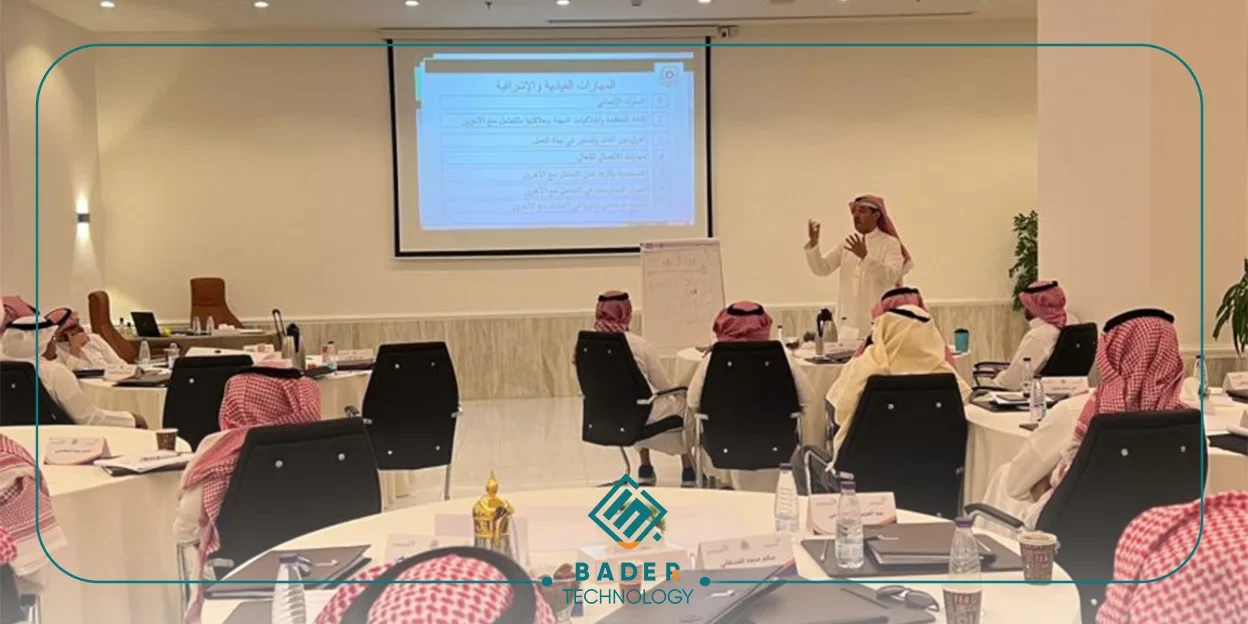
Bader Academy offers a training program designed to prepare candidates for the Project Management Professional certification. The program is advertised as 36 training hours over 6 days, with options to attend in Riyadh or study remotely.
Its topics include the project life cycle, scope and scheduling, cost and resources, risk and quality, communication and stakeholders, leadership, and control.
The program is designed for professionals, project managers and coordinators, and people working in operations, engineering, technology, and management, as well as anyone who wants to develop a structured understanding of project management and prepare more effectively for the exam.
Want to Learn More About the Program and the Next Cohort?
Review the program page to confirm the current dates, price, and attendance format. You should also ask the academy's team whether the training-hours documentation meets PMI's requirements based on the date you plan to submit your application.
If you are comparing different professional career paths, you can also explore the available professional certifications or the guide to online courses in Saudi Arabia, then contact Bader Academy for information about the appropriate upcoming cohort.
Frequently Asked Questions About PMP Courses and Certification
Does Completing a PMP Course Give Me the Official PMP Certification?
No. A course helps you learn and prepare and may cover the required training hours if it qualifies. The official PMP certification is issued by PMI after your application is accepted and you pass the exam.
How Many Training Hours Are Required to Apply?
PMI currently requires 35 hours of qualifying professional training, or a valid CAPM certification. Check the training provider's requirements, especially if the training is live and you plan to submit your application after December 1, 2026.
Is the PMP Exam Available in Arabic?
Yes. Arabic is one of the languages offered by PMI for the exam. Review the language settings when scheduling your exam and confirm the options available at the test center or for the online exam.
How Many Questions Are on the PMP Exam and How Long Does It Take?
The 2026 exam consists of 180 questions over 240 minutes, including two breaks of 10 minutes each.
Can I Obtain the PMP Without Experience?
No. PMP currently requires professional project leadership experience ranging from two to five years depending on your educational background. If you do not meet the experience requirement, CAPM or a project management fundamentals course may be a suitable starting point.
What Is the Difference Between PMP and CAPM?
PMP focuses on practitioners with experience leading projects, while CAPM is an entry-level option for people who want to demonstrate their foundational knowledge of project management but do not have the experience required for PMP.
How Long Is the PMP Certification Valid?
The certification operates on a three-year renewal cycle. PMP holders need to earn 60 Professional Development Units (PDUs) during the cycle according to PMI requirements to maintain the certification.
Is a PMP Course the Right Step for You?
A PMP course can be a useful investment when you have experience close to PMI's requirements, want to turn your practical experience into a structured methodology, and prepare for an exam that relies on professional judgment and scenarios.
Start by checking your eligibility, then compare programs based on the freshness of their content, training-hour eligibility, mock exams, and support rather than price alone.
Review the PMP program details at Bader Academy and confirm the dates, content, price, and training-hour requirements before registering.